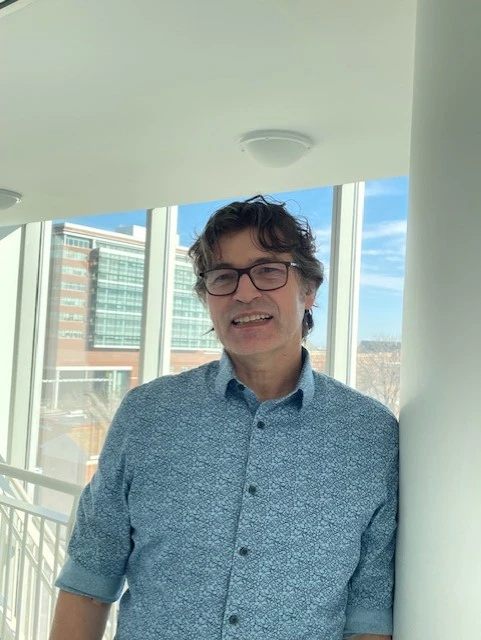



Rafik Tadros, Montreal Heart Institute, Canada & Franck Housseau, CRC Lille laboratory
-
On 09 June 2026Amphi DEfalse false
-
10H45
Scientific Seminar
Implications of complex genetics in the cardiogenetics clinic
Rafik Tadros, MD, PhD
Montreal Heart Institute, Canada
Abstract & Biography of Rafik Tadros
Coming soonTargeting Ion Channel genetic variants and neuroimmune inflammation in long term post-infectious dysautonomia
Franck Housseau, PharmD, PhD, CRCLille
Team "Microbiome, IMmunosurveillance of Infection and Cancer" (MIMIC)
Inserm Research Director, Co-Director Team MIMIC
Adjunct Associate Professor, Department of Oncology, Johns Hopkins University
Abstract of Franck Housseau
Postural Orthostatic Tachycardia Syndrome (POTS) is a clinically heterogeneous, mechanistically undercharacterized post-infectious autonomic disorder that has historically been managed as a diagnosis of exclusion (lacking validated biomarkers, structured care pathways, or mechanism-informed therapeutic strategies). HOTSPOTS addresses this gap through a two-hit pathogenic framework in which heritable ion channel variants establish a permissive neurophysiological substrate, upon which infectious or inflammatory insults precipitate sustained dysregulation of autonomic, gastrointestinal, and immune homeostasis. Variant-driven perturbations in channel gating, expression, or activity-dependent modulation are hypothesized to lower the threshold for autonomic instability, remaining subclinical until an environmental trigger unmasks the phenotype (a model that accounts for both the post-infectious onset pattern characteristic of POTS and the variable penetrance widely observed across genetically susceptible individuals).
To interrogate this model rigorously, HOTSPOTS integrates harmonized European and US longitudinal cohorts with deep immunological and genetic phenotyping, human organoid platforms, genetically accurate preclinical models, and a mechanism-based Phase 2 clinical study. For consortia working at the intersection of ion channel genetics and human disease, HOTSPOTS offers a translational platform to advance variant-level discoveries toward clinical stratification, biomarker validation, and therapeutic application.
Biography of Franck Housseau
Franck Housseau, PharmD, PhD, HDR, is Research Director at INSERM U1003, Cell Physiology Unit (University of Lille) and Adjunct Associate Professor of Oncology at Johns Hopkins University School of Medicine. He received his doctoral training in Immunology at the Pasteur Institute and Denis Diderot University of Paris VII, followed by postdoctoral fellowships at the National Cancer Institute (NIH) and Johns Hopkins University under the mentorship of Drs. Suzanne Topalian and Drew Pardoll. His research focuses on the immunological crosstalk between the gut microbiome and cancer, with particular emphasis on the pro-carcinogenic role of enterotoxigenic Bacteroides fragilis, Th17-driven colon tumorigenesis, and immune checkpoint responses in colorectal cancer. He leads the Microbiota Immunosurveillance of Infection and Cancer team at ONCOLille, extending his translational work to post-infectious immune dysregulation and the neuroimmune mechanisms underlying long-term systemic disease.