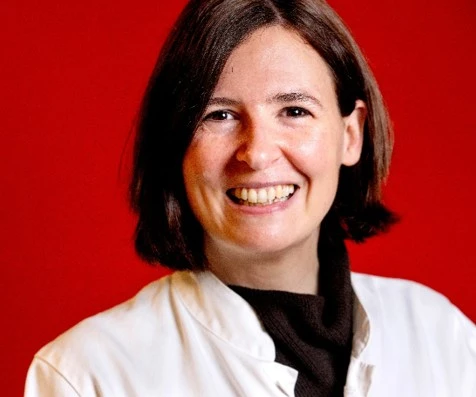




Leticia Hosta-Rigau, DTU HealthTech, Denmark
-
On 30 January 2026Amphi 6 - Bat Veilfalse false
-
11h30
From Artificial Organelles to Synthetic Blood: Engineering Life-Inspired Therapeutics
From Artificial Organelles to Synthetic Blood: Engineering Life-Inspired Therapeutics
Leticia Hosta-Rigau, PhD
Professor
DTU HealthTech (Department for health Technology, Technical University of Denmark)
Abstract
My research sits at the interface of materials science, chemistry, cell and molecular biology, and in vivo models, with the overarching goal of building cell-mimicking systems through bottom-up, fully synthetic strategies. Inspired by the compartmentalization of eukaryotic cells, my group pioneered capsosomes which are multi-compartment carriers made of thousands of liposomes enclosed within a polymeric shell. Capsosomes uniquely retain functionality in complex intracellular environments, enabling parallel and cascade enzymatic reactions as artificial organelles. We have also shown their therapeutic potential as extracellular microreactors in conditions such as phenylketonuria, oxidative stress, and cancer.
Building on these advances, we are now pushing the boundaries of artificial cell engineering toward a long-standing biomedical challenge: the development of a fully synthetic red blood cell (RBC). Unlike traditional blood substitutes, which focus mainly on hemoglobin encapsulation, our approach integrates multiple RBC functions, including oxygen and carbon dioxide transport and antioxidant activity. Being fully synthetic, our RBC substitutes overcome key limitations of donor blood such as limited supply, short shelf life, special storage requirements, and risk of disease transmission. Our vision is that artificial RBCs could be stored as a stable dried powder, carried by medics, and reconstituted with saline before administration at the site of injury, thereby compensating for blood loss and increasing the likelihood of survival.
By uniting concepts from biomimetic carriers, synthetic organelles, and encapsulated biocatalysis, our work pushes the field beyond proof-of-concept studies and toward translational applications. Ultimately, our goal is to restore or replace lost cellular functions with robust, multifunctional synthetic systems, opening new avenues for therapeutic intervention.
Biography
Professor Leticia Hosta-Rigau obtained her PhD in Chemistry from the University of Barcelona in 2009, followed by postdoctoral training at the University of Melbourne and Aarhus University. She established her independent career at the Technical University of Denmark (DTU), where she has led the Biomimetics, Biocarriers and Bioimplants (3Bs) group since 2015. Her interdisciplinary research focuses on biologically inspired materials for therapeutic delivery, with a particular emphasis on red blood cell mimics for emergency medicine. She was awarded an ERC Consolidator Grant in 2020 and has published 72 peer-reviewed papers, with over 4.200 citations.