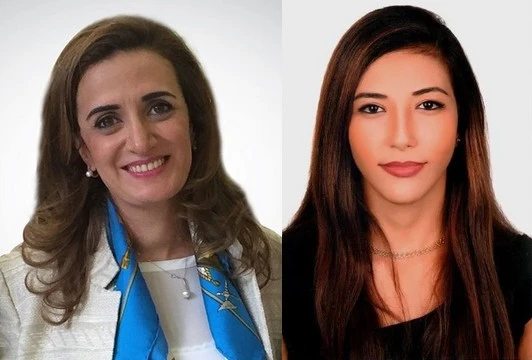




Marianne Abi Fadel & Carine Ayoub, Saint Joseph University, Beirut
-
On 03 July 2026Amphi DEfalse false
-
11h00
Scientific Seminar
Genetic study of dyslipidemia: from basic research to diagnosis and new therapeutic targetsts
Marianne Abi Fadel, PharmD, PhD
Director of ETLAM and Honorary Dean of the School of Pharmacy, Saint Joseph University of Beirut
Abstract
Genetic dyslipidemias represent a broad spectrum of inherited disorders of lipid metabolism resulting from pathogenic variants in genes regulating lipoprotein metabolism pathways
Over the past decades, genetic studies have progressively transformed this field, opening the path from gene discovery to the identification of therapeutic targets and, ultimately, to the development of effective lipid-lowering drugs.
Familial hypercholesterolemia (FH) represents one of the most common genetic disorders. Over the last few decades, major progress has been achieved in both the clinical and genetic understanding of FH, alongside the expansion of its therapeutic arsenal. This started by the discovery of the LDL receptor by Brown and Goldstein in 1970s and the introduction of statins. Later on, the identification by Abifadel et al. in 2003 of pathogenic variants in PCSK9 causing FH in French families with the disease, established the first link between PCSK9 and cholesterol metabolism leading to a new therapeutic class: the PCSK9 inhibitors.
This discovery paved the way for subsequent researchers to understand how PCSK9 regulates LDL cholesterol through reduction of LDL receptors, and for the development of monoclonal antibodies targeting PCSK9, namely alirocumab and evolocumab, both approved by the FDA and EMA in 2015. More recently, inclisiran, a small-interfering RNA (siRNA) that inhibits hepatic synthesis of PCSK9 has expanded therapeutic options. Inclisiran received EMA approval in 2020 and FDA approval in 2021. Other PCSK9 inhibitors are under development, and pharmaceutical advances are bringing oral agents on the horizon.
The progress achieved in FH represents a clear example of the successful translation of human genetic discoveries into novel therapies, illustrating how mechanistic insights can directly lead to therapeutic innovation. Similar translational pathways have also been demonstrated in other genetic dyslipidemias, leading to a considerable expansion of the therapeutic arsenal over recent decades; however, the full clinical impact of these advances remains limited by persistent challenges related to the accessibility, availability, and affordability of these therapies.
Biography
Professor Marianne Abi Fadel is the Honorary Dean of the School of Pharmacy at Saint Joseph University of Beirut (USJ), as well as the Director of the
School of Medical Laboratory Technicians (ETLAM) and the Laboratory of Biochemistry and Molecular Therapeutics (LBTM) at USJ. She is a French Lebanese Professor of Biochemistry and Molecular Biology at USJ and at Sorbonne University in Paris (ICAN INSERM UMRS 1166). She discovered the implication of PCSK9 mutations in familial hypercholesterolemia (Abifadel et al. Nature Genetics 2003), paving the way for a new class of lipid-lowering drugs: the PCSK9 inhibitors. She is involved in national and international collaborations on genetic dyslipidemia, especially Familial Hypercholesterolemia FH (EAS-FHSC; FH-EARLY), is an appointed member at large of the board of directors of the International Atherosclerosis Society (IAS) and has authored numerous publications in high-impact factor journals. Born in Beirut, she received her PharmD from USJ, her Laboratory Medicine and Clinical Chemistry Diploma from USJ, and her PhD in Molecular Genetics in 2003 and the French habilitation to supervise research (HDR) from the University of Paris-Descartes. She conducted her research in Paris at INSERM U781;1148; and UMRS 1166, and in Beirut at the LBTM. She was awarded several distinctions in France and Lebanon for her work on FH, most recently the prestigious Christophe Mérieux Prize 2021 from the “Institut de France” in Paris; the Golden Award of the Italian Society of Cardiology in 2022, in Rome, and the ‘Philippe Kfouri Prize from the French National Academy of Medicine’ in Paris in 2025. She is a member in the National French Academy of Pharmacy as an international correspondent since 2019.
Diagnostic approach and research strategy in a country with a high prevalence of dyslipidemia and consanguinity
Carine Ayoub,PharmD, PhD
Full-time Lecturer at Saint Joseph University of Beirut
Abstract
Background and Aims
Inherited lipid disorders are major causes of premature cardiovascular disease, pancreatitis, liver disease, or other serious complications. Despite major advances in the understanding of their molecular basis, these disorders remain substantially underdiagnosed and undertreated worldwide, including in the Middle East. The Lebanese population is characterized by a relatively homogeneous genetic background and a high rate of consanguinity, creating favorable conditions for the emergence of founder mutations and monogenic dyslipidemias. The aim of the work at our laboratory is to improve the diagnosis of inherited lipid disorders and to characterize their molecular spectrum in Lebanon, including familial hypercholesterolemia (FH), familial hypobetalipoproteinemia (FHBL), familial chylomicronemia syndrome (FCS) and Tangier disease.
Research Strategy and Methods
Our approach relies on national and international collaborations and combines detailed clinical phenotyping, family recruitment, molecular analysis of candidate genes, and haplotype studies to investigate potential founder effects for some mutations. In parallel, plasma PCSK9 concentrations are measured across different lipid disorders to further explore its emerging and still incompletely understood roles in lipid homeostasis.
Results
Among patients with autosomal dominant FH, the LDLR p.(Cys681Ter) Lebanese variant accounted for 81.5% of FH probands, presumably reflecting a founder effect, while additional less frequent LDLR variants were also identified. In autosomal recessive FH, the LDLRAP1 p.(Gln136Ter) variant was detected in a Lebanese family. Among patients with FHBL, the APOB p.(Arg490Trp) variant was identified in approximately 80% of the probands and their affected relatives, and haplotype analysis supported a possible founder effect. In FCS, the LPL p.(Asp201Val) variant was identified in Lebanese patients and may also present a founder effect, whereas the LPL p.(Val227Phe) variant was detected in a Syrian family residing in Lebanon. Moreover, we described the first Lebanese patient with Tangier disease, carrying a novel pathogenic ABCA1 p.(Gly592Asp) variant.
Conclusion
Inherited lipid disorders are relatively common in Lebanon due to population structure and consanguinity and are frequently associated with founder mutations within a genetically homogeneous population. Integrating clinical evaluation, family screening, molecular testing, and haplotype analysis enhances patient identification, improves early diagnosis and timely intervention before complications occur, and helps in determining genotype–phenotype correlations. These findings also provide insights into the genetic architecture of lipid disorders in Lebanon, advance understanding of lipid homeostasis, and highlight the public health importance of raising awareness of the genetic risks associated with consanguineous marriages.
Biography
Dr Carine Ayoub is an Associate Professor at the School of Pharmacy and a Researcher at the Laboratory of Biochemistry and Molecular Therapeutics at Saint-Joseph University of Beirut, Lebanon. She obtained her Doctor of Pharmacy degree in 2017, her Master of Research in Pharmaceutical and Biological Sciences degree in 2018, and her PhD in Pharmaceutical and Biological Sciences in 2023 from Saint-Joseph University of Beirut. She also holds a Master’s degree in Public Health, with a specialization in Methodology and Statistics in Biomedical Research, from Paris-Saclay University. In addition, she completed a postdoctoral fellowship at UMR_S1166 ICAN, Faculty of Medicine, Sorbonne University in France. Dr. Ayoub’s research work mainly focuses on the biochemical, molecular, genetic and clinical studies of lipid metabolism diseases and their associated complications, as well as on the role of PCSK9 in lipid metabolism. She has authored and co-authored several publications in scientific journals, thereby contributing to the advancement of knowledge in her field. She is also a member of the Regional Federation Africa and Middle East of The International Atherosclerosis Society. Dr. Ayoub's commitment to education and research aims to have a positive impact on the academic excellence, the training of responsible and competent health professionals, the scientific community and the health sector.