





ANR HEARST & FFC ADIPOSE : Julien Barc & Vincent Probst (2023-2027)
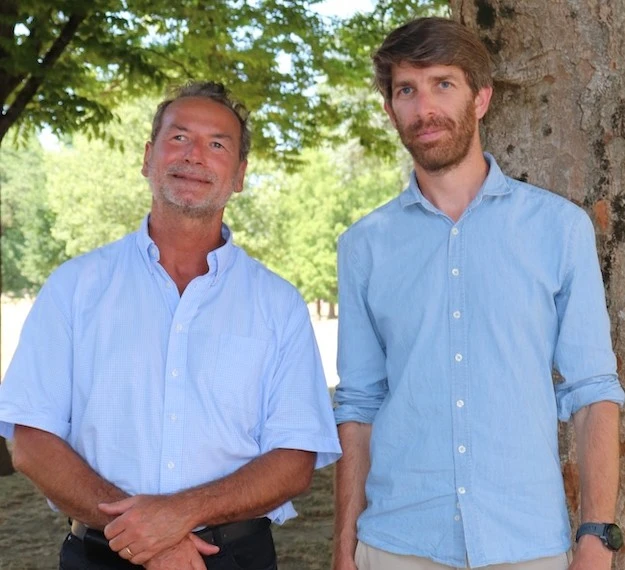
Julien Barc and Vincent Probst are the co-coordinator of the Projects HEARST and ADIPOSE supported by the ANR and the French Federation of Cardiology respectively. Both aim to improve the diagnostic and the prognostic of the Arrhythmogenic CardioMyopathy (ACM).
The ACM is an inherited cardiac disease characterized by a progressive fibrofatty myocardial replacement mainly in the right ventricle. ACM is associated with a dramatic prognosis with 23% of monomorphic ventricular tachycardia and 5% sudden cardiac death (SCD) in young adults (<25 yo) without an implantable cardioverter defibrillator (ICD) while patients with ICD present an appropriate shock in 23-48% during a 5 years follow-up. Rare variants are identified mainly in desmosomal genes (PKP2, DSC2, DSG2, DSP and JUP genes) in ~50% of the probands. However, clinical management remains challenging since a low penetrance in relatives 28-58% and a high variability in expressivity and severity annihilate any preventive strategy.
To tackle the lack of knowledge regarding the molecular mechanism underlying ACM expression variability and severity, the projects HEARST and ADIPOSE propose a multi-disciplinary and comprehensive translational study consisting of characterizing the likely complex ACM genetic architecture from the largest worldwide ACM patient set and uncover novel associated molecular mechanisms and therapeutic targets. More specifically, we aim to investigate the whole spectrum of variants, from common (HEARST) to rare (ADIPOSE) variants and from single nucleotide variant to large rearrangements.
The ACM is an inherited cardiac disease characterized by a progressive fibrofatty myocardial replacement mainly in the right ventricle. ACM is associated with a dramatic prognosis with 23% of monomorphic ventricular tachycardia and 5% sudden cardiac death (SCD) in young adults (<25 yo) without an implantable cardioverter defibrillator (ICD) while patients with ICD present an appropriate shock in 23-48% during a 5 years follow-up. Rare variants are identified mainly in desmosomal genes (PKP2, DSC2, DSG2, DSP and JUP genes) in ~50% of the probands. However, clinical management remains challenging since a low penetrance in relatives 28-58% and a high variability in expressivity and severity annihilate any preventive strategy.
To tackle the lack of knowledge regarding the molecular mechanism underlying ACM expression variability and severity, the projects HEARST and ADIPOSE propose a multi-disciplinary and comprehensive translational study consisting of characterizing the likely complex ACM genetic architecture from the largest worldwide ACM patient set and uncover novel associated molecular mechanisms and therapeutic targets. More specifically, we aim to investigate the whole spectrum of variants, from common (HEARST) to rare (ADIPOSE) variants and from single nucleotide variant to large rearrangements.
Collaborators:
- Estelle Gandjbakhch and Eric Villard : Sorbonne Université, INSERM, UMRS 1166, ICAN – Institut ICAN, Paris Centre de référence des troubles du rythme héréditaires, APHP, Paris
- Philippe Chevalier and Antoine Delinière : Centre de référence des troubles du rythme cardiaque héréditaires, HCL, Lyon
- Gaelle Boncompain : Institut NeuroMyoGene, CNRS/UCBL1 UMR5261, INSERMU1315, Lyon


Updated on 31 July 2026.